Flores' Fiery Heart: An In-Depth Guide to Lewotobi Volcano and East Flores' Enduring Spirit
Flores' Fiery Heart: An In-Depth Guide to Lewotobi Volcano and East Flores' Enduring Spirit
Nestled on the rugged and captivating Indonesian island of Flores, the Lewotobi volcanic complex stands as a majestic, ever-present, and often temperamental sentinel. Comprising two distinct peaks, Lewotobi Perempuan ("female") and Lewotobi Laki-Laki ("male"), this twin-volcano system is a profound testament to nature's breathtaking beauty and formidable power. While both peaks have etched their presence into the island's history, frequently reminding communities of their potent existence through seismic tremors, ash plumes, and glowing lava, Lewotobi Laki-Laki, in particular, has recently captured global attention with its dramatic and often spectacular eruptions.
This comprehensive guide delves deep into the heart of Lewotobi, exploring its fascinating geological significance, its historical and ongoing impact on the resilient local communities, and offering an essential, expanded guide for intrepid travelers seeking to experience the raw, untamed spirit of Flores and its fiery guardian. It's an invitation to a journey not just through a dramatic landscape, but through time, culture, and the enduring human spirit that thrives in the shadow of one of nature's most powerful forces. Prepare to be awestruck, educated, and inspired by the vibrant life that pulses around this magnificent, living mountain.
Understanding Lewotobi: The Twin Peaks of Flores
The Lewotobi complex is strategically situated in the eastern part of Flores Island, within the East Nusa Tenggara province—an archipelago renowned globally for its intense seismic and volcanic activity. The twin peaks are located near the regency of East Flores, nestled roughly between the larger, more developed towns of Maumere to the west and Larantuka to the east. This prime location places them at the crossroads of a unique cultural heritage and dynamic geological forces, making them a focal point for both scientific study and adventurous tourism.
Lewotobi Perempuan, the "female" volcano, stands at an impressive elevation of approximately 1,703 meters (5,587 feet) above sea level. While it boasts its own historical record of eruptions, often displaying fumarolic activity, it is generally considered less active than its male counterpart in recent times. Its slopes are often lush and verdant, a stark contrast to the more volatile Laki-Laki.
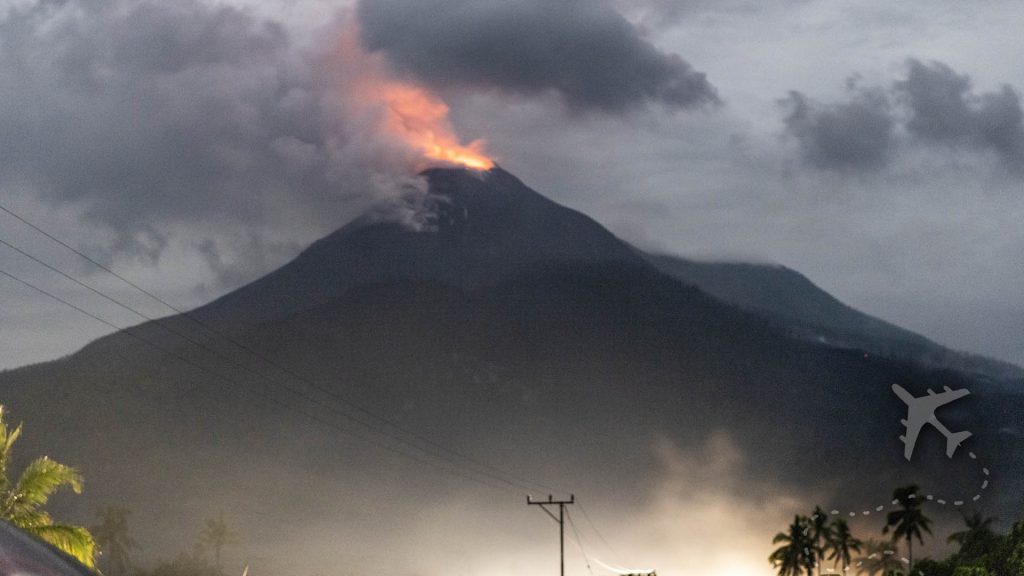
Lewotobi Laki-Laki, the "male" volcano, rises to about 1,586 meters (5,203 feet) and is the more frequently and visibly active of the two. It is often characterized by persistent fumarolic activity—the steady emission of steam and volcanic gases—along with regular ash plumes, incandescent glow from its crater, and occasional lava flows that dramatically reshape its flanks. These flows, when safely observed from a distance, create mesmerizing fiery spectacles, especially at night. The names, "Perempuan" and "Laki-Laki," are deeply rooted in local cultural beliefs and cosmology, reflecting the balance, duality, and complementary forces often perceived in nature by indigenous communities across Flores. They signify a natural harmony, even amidst the mountain's raw power.
Geologically, Lewotobi is a classic example of a stratovolcano, also known as a composite volcano. This type of volcano is characterized by its iconic conical shape and steep slopes, meticulously built up over millennia by many layers of hardened lava, tephra (fragments of rock and ash), pumice, and volcanic ash. Its location is no accident; it sits squarely on the infamous Pacific Ring of Fire, a vast, horseshoe-shaped zone stretching thousands of kilometers. This region is notorious for its intense seismic and volcanic activity, a direct consequence of the movement and collision of several major tectonic plates beneath the Earth's crust. This dynamic geological setting is precisely why Flores, and Indonesia as a whole, is home to so many active volcanoes, making it a hotspot for both intensive scientific study and an unparalleled, unique travel experience for those drawn to the Earth's raw power.
A History of Fire and Resilience: Time, Tragedy, and Adaptation
Lewotobi’s history is a compelling narrative of continuous and often dramatic interaction between humans and the natural world, a story woven with threads of both awe-inspiring beauty and the undeniable reality of potential tragedy. Records of its powerful eruptions date back centuries, with varying intensities ranging from minor ash expulsions that dust the landscape to significant explosive events that have necessitated mass evacuations and drastically reshaped the surrounding terrain.
One notable and profoundly impactful aspect of Lewotobi's activity is its cyclical nature. Periods of relative dormancy, when the peaks might seem serenely quiet, are invariably interspersed with heightened activity. This creates an ever-present sense of anticipation, caution, and deep respect among the local inhabitants who understand the mountain's rhythms. Villages such as Boru, Pululera, Hokeng, and Wulublolong, nestled intimately on the incredibly fertile slopes and plains surrounding the volcano, have historically borne the brunt of its eruptions. Ashfall, rich in minerals, can initially benefit agriculture, but heavy, prolonged ashfall can blanket and destroy crops, disrupting livelihoods and food security. While direct lava flows are less common as immediate threats to densely populated areas, they can certainly alter the terrain, block vital roads, and force communities to temporarily or permanently relocate, showcasing the mountain's sheer transformative power. The early 20th century, and more recently, the late 20th and early 21st centuries, have witnessed several significant eruptions, serving as stark, unforgettable reminders of the volcano's immense power. Each event, while potentially tragic and certainly challenging, has also paradoxically forged an even stronger sense of community, resilience, and mutual support among the people.
Local lore and myths are deeply, inextricably intertwined with Lewotobi. The volcano is not merely a geological feature on a map; it is revered as a living entity, often seen as a capricious deity or a powerful ancestor spirit. It is perceived as a source of both life (through the incredibly fertile, volcanic soil that sustains agriculture) and potential destruction. Stories passed down through generations speak of ancestral spirits residing within the peaks, guarding the land and its people. Traditional ceremonies, often involving offerings and prayers, are sometimes performed to appease the mountain, seeking its benevolence, understanding its warnings, or simply acknowledging its spiritual power. This profound cultural connection adds another, invaluable layer of depth to the experience of visiting Lewotobi, offering an unparalleled glimpse into a way of life deeply attuned to the rhythms and temperament of nature.
Experiencing Lewotobi (Safely): Navigating the Fiery Landscape
Visiting an active volcano like Lewotobi is an exhilarating experience, but it requires careful planning, profound respect for nature's immense power, and strict adherence to safety guidelines. While the allure of its raw beauty and power is undeniable, your safety and the safety of local communities must always be paramount.
Visiting During Volcanic Activity: Safety First, Always
During periods of heightened volcanic activity, such as recent, dramatic eruptions, travel to the immediate vicinity of Lewotobi Laki-Laki is often severely restricted or completely forbidden. The local geological agency, Pusat Vulkanologi dan Mitigasi Bencana Geologi (PVMBG) or the Center for Volcanology and Geological Hazard Mitigation, issues regular, critical advisories and sets clear exclusion zones. These advisories operate on a four-level system (Level I: Normal, Level II: Waspada/Alert, Level III: Siaga/Standby, Level IV: Awas/Warning), with corresponding radii for exclusion zones. It is absolutely crucial to consult these official, up-to-date sources *before* planning any visit. Local authorities, guesthouses, and reputable tour operators will also have the latest information. Respecting these restrictions is not merely advisable; it is absolutely essential for your safety and the safety of the local communities. Ashfall can severely affect air quality, causing respiratory issues and drastically reducing visibility; pyroclastic flows (fast-moving currents of hot gas and volcanic debris) or lava flows pose immediate, life-threatening dangers within exclusion zones. Volcanic gases, like sulfur dioxide, can also be toxic.
What to See and Do (When Safe and Permitted)
When conditions permit, and volcanic activity is within safe parameters (typically Level I or II, with clear directives from PVMBG), Lewotobi and its surrounding areas offer incredible, unforgettable opportunities:
- Spectacular Views and Photography: From a safe, designated distance, particularly during the magical hours of sunrise or sunset, the sight of the twin peaks silhouetted against the Flores sky is truly breathtaking. If Laki-Laki is active, distant views of incandescent glow from the crater or glowing lava flows at night can be a truly unforgettable and humbling experience, a powerful display of Earth's internal, primal forces. Head to viewpoints in nearby villages like Boru or Hokeng, or slightly elevated areas further afield, to capture these majestic scenes.
- Explore Nearby Villages: Engage meaningfully with the local communities who have lived alongside the volcano for generations. Learn about their ingenious adaptations, their unwavering resilience, and their unique cultural practices. Support local economies directly by purchasing authentic handicrafts, such as traditional *ikat* weaving, or trying delicious local cuisine. Witness their daily life, often centered around farming the fertile volcanic soil.
- Cultural Immersion: Immerse yourself in traditional Floresese life. The area around Lewotobi is rich in local customs, warm hospitality, and ancient traditions. You might encounter ceremonies, communal activities, or simply enjoy conversations with villagers eager to share their way of life.
- Natural Hot Springs: In some volcanic areas of Flores, natural hot springs offer a chance to relax and experience the beneficial geothermal energy from a safe distance. While direct hot springs at Lewotobi might be limited, research local options in the wider East Flores region for a soothing end to a day of exploration.
Hiking and Trekking (If Permitted and With Strict Guidelines)
Under exceptionally stable conditions and with explicit official clearance, some adventurous and experienced travelers might consider trekking the lower slopes or even attempting a summit of Lewotobi Perempuan. Hiking Lewotobi Laki-Laki is generally discouraged or forbidden due to its persistent and unpredictable activity, even during seemingly quiet periods.
- Local Guides are Absolutely Essential: Never attempt to trek on any part of the volcano without an experienced, officially recognized local guide. They possess invaluable knowledge of the terrain, understand the nuanced local conditions, are aware of recent changes, and can communicate effectively with villagers and local authorities regarding the latest safety updates and protocols. They are also your cultural bridge to the community.
- Essential Equipment: Pack sturdy, broken-in hiking boots with good ankle support, ample water (at least 2-3 liters per person), sun protection (wide-brimmed hat, sunglasses, high SPF sunscreen), a comprehensive first-aid kit, and layers of clothing (it can be cool in the morning and evening, but hot during the day). A headlamp, rain gear, and high-energy snacks are also crucial.
- Physical Fitness: The ascent, even of Lewotobi Perempuan's lower slopes, can be challenging, involving steep terrain, potentially loose volcanic scree, and sometimes dense vegetation. A good level of physical fitness and stamina is required.
Beyond the Volcano: Exploring East Flores' Rich Tapestry
The Lewotobi region is but one vibrant thread in a broader, captivating tapestry of attractions in East Flores. Extending your journey beyond the immediate volcanic area allows for a richer, more holistic understanding of the island's diverse offerings.
- Larantuka: The City of Replicas: The capital of East Flores Regency, Larantuka, is famously known as the "City of Replicas" due to its profound Portuguese Catholic influence and unique Holy Week (Semana Santa) traditions. This vibrant coastal town boasts a charming colonial atmosphere, with old churches and a palpable sense of history. Explore its narrow streets, visit the ancient cathedral, and if your timing is right, witness the deeply moving Semana Santa processions, a truly unparalleled cultural experience that draws pilgrims from across Indonesia and beyond.
- Maumere: Diving and Cultural Hub: As the largest city in East Flores and a major entry point via its airport, Maumere offers more amenities and serves as an excellent base. It is a renowned gateway to superb diving and snorkeling sites, boasting vibrant coral reefs that have made a remarkable recovery from a devastating tsunami in 1992. Explore offshore islands, discover diverse marine life, or visit the nearby traditional villages like Watublapi, famous for their exquisite *ikat* weaving traditions, offering a deeper insight into Flores' artistic heritage.
- Kelimutu National Park: The Three-Colored Lakes: While a slightly longer journey westward from Lewotobi, Kelimutu's famed three multi-colored crater lakes are an absolute highlight of Flores and a must-see for many visitors. The mystical colors of the lakes change periodically due to varying mineral compositions, creating an ethereal and ever-changing landscape that holds deep spiritual significance for the local Lio people. It's a surreal and unforgettable natural wonder.
- Pristine Beaches and Coastal Beauty: The coastline of East Flores features numerous pristine, often deserted beaches, offering idyllic opportunities for relaxation, swimming, and experiencing the tranquil rhythm of local fishing communities. Seek out hidden coves or simply enjoy the sunsets over the vast expanse of the Flores Sea.
Essential Travel Information for Flores
Getting to Flores
The primary international gateway to Flores is
Labuan Bajo (LBJ) in the far west, serving as the jump-off point for Komodo National Park. However, for reaching the Lewotobi region in East Flores,
Maumere (MOF) - Frans Seda Airport is by far the most convenient and recommended airport. Direct flights to Maumere are regularly available from Denpasar (Bali) and some other major Indonesian cities like Kupang. Larantuka also has a small airport (LKA - Gewayantana Airport), but flights are less frequent and typically connect via Maumere or Kupang. Booking flights in advance, especially during peak season, is advisable.
Getting to the Lewotobi Region
- From Maumere: The journey to the Lewotobi area (e.g., Boru, Hokeng, Pululera) typically takes 2-3 hours by car or public transport, depending significantly on the specific village and current road conditions. You can hire a private car with a driver (recommended for comfort and flexibility), arrange an ojek (motorcycle taxi) for shorter distances, or utilize intercity public transport options like shared vans or *bemos*.
- From Larantuka: Similar travel times and transport options apply when traveling from Larantuka to the Lewotobi area. The roads offer scenic views of the coastline and interior.
Accommodation
- Maumere: Offers the widest and most diverse range of accommodation, from budget guesthouses and homestays to comfortable mid-range hotels with amenities like air conditioning and hot water. Many travelers choose to base themselves here and take day trips to Lewotobi and other East Flores attractions.
- Larantuka: Has a selection of guesthouses and small hotels, often simpler and more traditional in style compared to Maumere. These provide a charming base for exploring the town's unique cultural heritage.
- Local Guesthouses/Homestays: In villages closer to Lewotobi, such as Boru or Hokeng, you might find basic homestays that offer a more authentic cultural immersion experience. These usually provide simple rooms, shared bathrooms, and often include meals. Always inquire about their safety protocols and exact proximity to any current exclusion zones during periods of volcanic activity before booking.
Navigating Flores: Your Comprehensive Transport Guide
Flores' transport infrastructure is continually improving but can still offer an adventurous experience. Planning your movements in advance is key to a smooth journey.
Airport to City Transport Guide (Maumere - MOF)
Upon arrival at Frans Seda Airport (MOF) in Maumere:
- Airport Taxis: Official airport taxis are usually readily available outside the terminal. They generally operate on a fixed price basis into Maumere city center, which should be clearly displayed or verbally agreed upon beforehand. This is a hassle-free option, especially if you have luggage.
- Ride-Hailing Apps (Limited): While apps like Gojek or Grab are prevalent in larger Indonesian cities, their availability might be limited or inconsistent in Maumere. You might find motorcycle-based Gojek drivers (GoRide), but car services (GoCar/GrabCar) are less common or may require a longer wait. It's worth checking, but don't rely solely on them.
- Ojek (Motorcycle Taxi): Locals frequently use *ojeks* for short distances. You can find them outside the airport gates. Always negotiate the price to your destination beforehand, as they do not use meters.
- Hotel Transfers: Many hotels and guesthouses in Maumere can arrange airport pick-up services, often for an additional fee. This is a convenient and reassuring option if you've pre-booked your accommodation and prefer a seamless arrival.
Public Transport Guide
Traveling around Flores by public transport is an immersive experience in itself, allowing for authentic interaction with locals and offering a genuine glimpse into daily life. Patience and flexibility are key.
- Bemos/Angkots: These are shared mini-vans or small buses that ply fixed routes within towns and between nearby villages. They are the most economical way to travel short distances, but they can be crowded, don't always run on a strict schedule (they often wait until full), and can make frequent stops. To hail one, simply wave it down on its route. Confirm your destination and price with the driver before boarding.
- Intercity Buses/Travel Vans: For longer distances between major towns like Maumere, Larantuka, Ende, or even further to Labuan Bajo, there are larger buses or shared travel vans (often referred to as "travel" or "Kijang" services). These are generally more comfortable than *bemos* for long trips, often with air conditioning, but can still be slow due to frequent stops to pick up and drop off passengers and varying road conditions. Tickets can be purchased at bus terminals or sometimes arranged through guesthouses.
- Logging Trucks (Local "Bus"): In more remote areas, especially around Lewotobi and mountainous regions, converted logging trucks (sometimes affectionately called "oto") serve as informal public transport, carrying both people and goods. These are very basic, often uncovered, but offer an authentic (and sometimes incredibly bumpy) local experience. Negotiate the fare with the driver or his assistant. They often run on specific days or when there's enough cargo/passengers.
Car Rental / Bike Rental Options
- Car Rental with Driver: Renting a car with a local driver is highly recommended for exploring Flores, especially if you're uncomfortable driving on challenging, winding roads or navigating without GPS (which can be spotty). Drivers are experienced with local conditions, know the best routes, and can often act as informal guides, sharing insights into local culture and attractions. This is often the safest and most comfortable option, though pricier.
- Self-Drive Car Rental: Self-drive car rentals are available in larger towns like Maumere or Labuan Bajo. However, be aware that Flores roads can be winding, narrow, and sometimes in poor condition, especially outside main arteries. An International Driving Permit (IDP) is legally required. Insurance coverage can be limited or basic, so check thoroughly and understand your liability before signing.
- Motorbike Rental: Motorbikes (scooters) are a popular and flexible way for adventurous tourists to get around Flores. They offer flexibility and access to smaller roads and viewpoints. Rental shops are available in Maumere and Larantuka, with prices generally affordable (around 70,000-100,000 IDR per day). Again, an IDP endorsed for motorcycles is legally required, and helmets are mandatory (ensure the provided helmet is good quality). Be acutely aware of road conditions, local driving habits (which can be erratic), and always wear appropriate safety gear including long sleeves/pants to protect from sun and scrapes.
Budget Transport Tips
- Utilize Public Transport: *Bemos* and intercity buses are the most economical way to travel, though they require more time, patience, and can be less comfortable. Embrace the local experience!
- Share Rides: If you meet other travelers going in the same direction, consider sharing the cost of a private car or taxi. This can significantly reduce individual expenses while enjoying the benefits of private transport.
- Negotiate Fares: For *ojeks*, non-metered taxis, or private charters, always agree on the price *before* starting your journey. A little friendly haggling is customary and expected.
- Walk Where Possible: For short distances within towns or villages, walking is free, healthy, and allows you to absorb the local atmosphere and discover hidden gems at your own pace.
Staying Connected: Best SIM Card for Tourists
Staying connected in Flores is important for safety, navigation (especially with mapping apps), sharing your adventures, and communicating with local guides or accommodations.
- Major Providers: The main telecommunication providers in Indonesia are Telkomsel, XL Axiata, and Indosat Ooredoo.
- Recommendation: Telkomsel: For Flores, Telkomsel generally offers the widest coverage and most reliable signal, especially in more remote areas and smaller villages. While other providers might offer slightly cheaper data packages in major cities, their network can be spotty or non-existent outside of the main towns on Flores. Investing in Telkomsel is usually worth the slightly higher cost for peace of mind and consistent connectivity.
- Airports: SIM cards can be purchased upon arrival at Maumere (MOF) or Denpasar (DPS) airports. Prices might be slightly higher here due to convenience, but it's the easiest way to get connected immediately.
- Official Stores: Visit dedicated Telkomsel, XL, or Indosat stores in larger towns like Maumere or Larantuka for the best deals, a wider range of data packages, and professional assistance with activation and registration.
- Mini-Marts/Convenience Stores: Small shops and local kiosks also sell SIM cards and top-up vouchers (pulsa), but you might need to seek assistance with activation or registration, as the process can sometimes be a bit complex.
- Registration Process: By Indonesian law, all SIM cards must be officially registered with your passport details. When purchasing, ensure the vendor completes this process for you. You'll typically need to provide your passport details, sometimes a copy, and your phone's IMEI number (which you can usually find by dialing *#06# on your device). The process can take a few minutes.
Safety and Responsible Tourism
Your journey to Lewotobi and Flores should be enriching, safe, and mindful of the local environment and culture.
- Volcano Safety: Always prioritize official warnings from PVMBG and local authorities. Do not, under any circumstances, enter restricted zones. Engage experienced local guides for any trekking or explorations near the volcano. Pay attention to weather changes and potential seismic activity.
- General Safety: Flores is generally safe for tourists, but petty crime (like pickpocketing) can occur, especially in crowded markets or bus stations. Keep valuables secure and out of sight. Be aware of your surroundings, especially at night. It's wise to inform someone of your itinerary, especially when venturing into remote areas.
- Health Precautions: Consult your doctor well in advance about recommended vaccinations (e.g., Hepatitis A & B, Typhoid, Tetanus). Carry a basic but comprehensive first-aid kit. Be mindful of food and water hygiene – drink only bottled water or filtered water, and be cautious with street food. Dengue fever and malaria are present in some areas, so use a strong insect repellent, wear long sleeves and pants at dusk/dawn, and consider antimalarial medication if recommended by your doctor for your specific itinerary. Stay hydrated, especially in the tropical heat.
- Respect Local Culture: Flores is rich in diverse cultures and traditions. Dress modestly when visiting religious sites (churches, mosques, traditional ceremonial houses) or traditional villages. Always ask permission before taking photos of people, especially children, and respect their decision if they decline. Learn a few basic Indonesian phrases (e.g., *terima kasih* - thank you, *apa kabar?* - how are you?, *permisi* - excuse me) – it goes a long way and is greatly appreciated by locals.
- Environmental Awareness: Practice responsible tourism by minimizing your waste; carry a reusable water bottle and avoid single-use plastics. Respect natural environments, including marine life if diving/snorkeling. Support sustainable local businesses and initiatives that benefit the community and preserve the island's natural beauty. Do not disturb wildlife or take souvenirs from natural sites.
Conclusion
Lewotobi, with its twin peaks standing proudly on Flores, is far more than just an active volcano; it is a living, breathing symbol of nature's raw, untamed power, a testament to the unwavering resilience of communities, and a captivating beacon of one of Indonesia's most enchanting islands. A visit to this fiery heart of Flores offers a unique and unforgettable blend of adventure, profound cultural immersion, and an overwhelming respect for the Earth's dynamic, ever-changing forces.
By approaching your journey with thorough preparation, utmost caution, and an open, respectful mind, you will not only witness the dramatic landscapes forged by fire and time but also connect deeply with the enduring spirit of the people who call this magnificent, volatile land home. Whether you are drawn by the sheer geological wonder, the intricate cultural tapestry, the thrill of discovery, or the serene beauty of its surroundings, Lewotobi promises an unforgettable chapter in your travel story, etching memories that will last a lifetime.
FAQ Section
Q: Is it safe to visit Lewotobi during an eruption?
A: During active eruptions, specific exclusion zones are strictly enforced by authorities (PVMBG). It is NOT safe to enter these zones due to risks of ashfall, toxic gases, pyroclastic flows, and lava. Always check official advisories and local news before planning your visit. You may still be able to view the volcano from a safe, distant, designated location.
Q: What's the best time of year to visit Flores and Lewotobi?
A: The dry season, which typically runs from April to October, is generally the best time to visit Flores. The weather is drier, making travel easier, roads more accessible, and offering clearer views of the volcano and other natural attractions. The shoulder months (April, May, September, October) can offer pleasant weather with fewer crowds.
Q: Do I need a guide to hike Lewotobi?
A: Yes, if hiking is permitted on Lewotobi Perempuan or its lower slopes, hiring an experienced local guide is highly recommended and often mandatory for safety reasons, to navigate the terrain, and to respect local customs. Do not attempt to hike Lewotobi Laki-Laki, even its lower slopes, without explicit official clearance, which is rare.
Q: What language is spoken in Flores?
A: The official language is Indonesian (Bahasa Indonesia). However, many local dialects and regional languages are also spoken across Flores. Learning a few basic Indonesian phrases will greatly enhance your travel experience and interaction with locals.
Q: What currency is used in Flores, and are ATMs available?
A: The currency used is the Indonesian Rupiah (IDR). ATMs are available in larger towns like Maumere and Larantuka. In smaller villages around Lewotobi, ATMs are rare or non-existent, so it's advisable to carry sufficient cash for your daily expenses, guides, and homestays.
Q: What essential items should I pack for a trip to Lewotobi and Flores?
A: Pack light, breathable clothing, sturdy hiking shoes, sun protection (hat, sunglasses, high SPF sunscreen), insect repellent, a reusable water bottle, a light rain jacket (especially during shoulder seasons), a basic first-aid kit, and a power bank for your devices. For volcanic areas, consider a dust mask or bandana during periods of ashfall.
Q: Is it safe to drink tap water in Flores?
A: No, it is generally not safe to drink tap water in Flores (or anywhere in Indonesia). Always drink bottled water or water that has been properly filtered and boiled. Many accommodations provide free drinking water, or you can purchase large bottles from shops.